
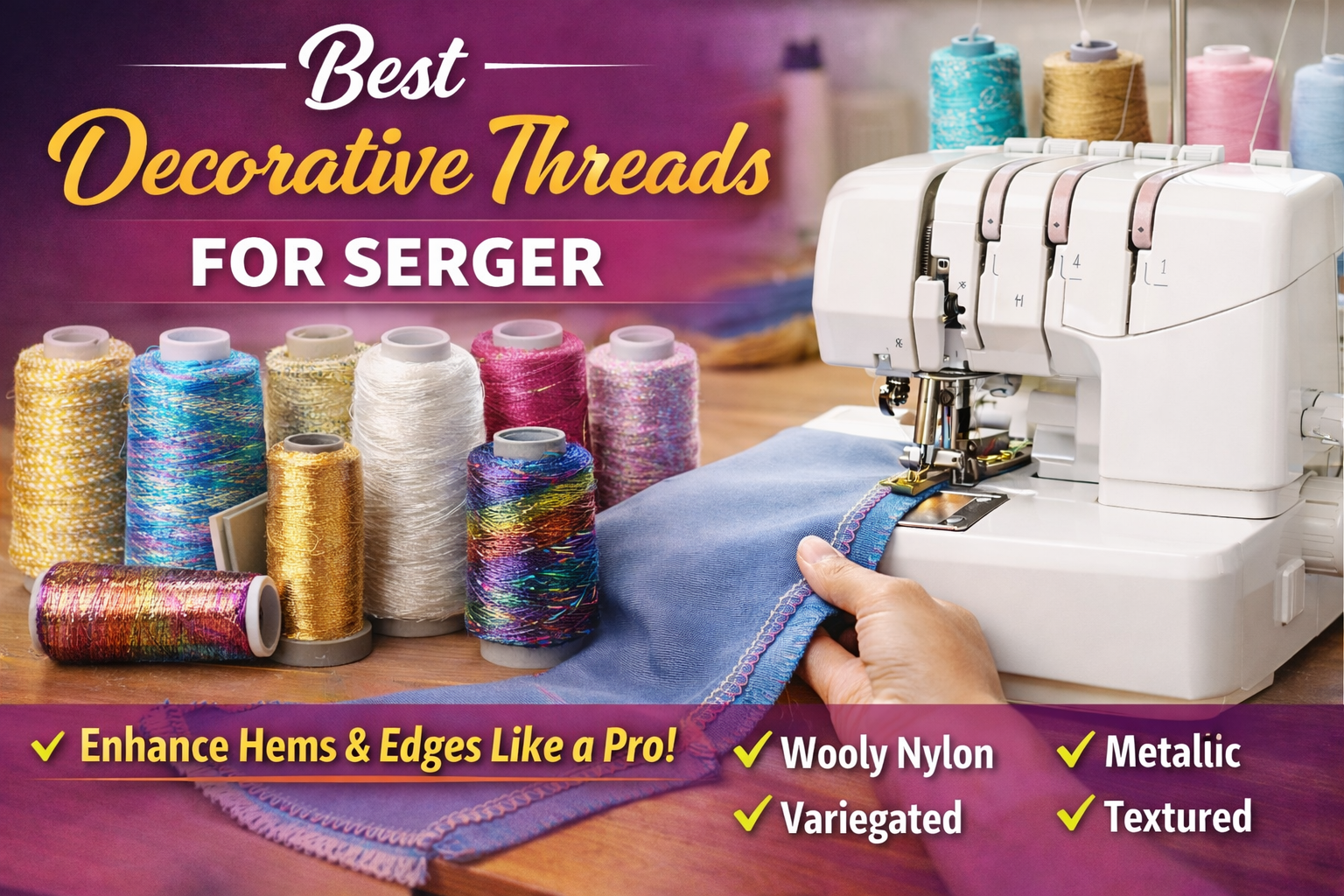
Decorative threads can transform serger sewing from functional to professional, stylish, and eye-catching. While standard overlock thread is built for strength and seam stability, decorative serger threads are crafted to enhance edges, elevate garment aesthetics, and create designer-level finishes at home.
If your goal is to sew hems, borders, or garment edges that look premium and intentional, the choice of thread becomes your creative paintbrush. In this guide, you’ll learn:
- The best decorative threads for serger machines
- What each thread is ideal for
- How to adjust tension and settings like a pro
- The mistakes to avoid when using specialty cones
- Project ideas that boost visual appeal and engagement
- Smart CTA placement to promote your affiliated serger course naturally
Let’s dive in.
Why Decorative Threads Matter on a Serger
A serger isn’t just a seam-locking tool — it’s also a machine capable of producing luxury edge finishes. Decorative threads help you:
- Create softer, fuller, or shinier hems
- Add a boutique, handcrafted signature to garments
- Enhance scarves, gowns, kids’ dresses, sleeves, and craft projects
- Make edges pop for social content, course trust, and affiliate clicks
- Achieve consistent stitch beauty when paired with correct settings
Most sewists upgrade to decorative threads when they want to stand out, experiment, or build authority through visuals — exactly the audience you want for your blog + course CTAs.
Types of Decorative Threads You Can Use on a Serger
Woolly Nylon
A soft, stretchy, textured thread that creates fluffy, cloud-like edges. It spreads wide to fill stitch loops, making it perfect for rolled hems and decorative edging.
Best for:
- Lingerie edges
- Scarves and soft garments
- Lightweight fabrics
- Baby/kids dress edges
- Decorative rolled hems
Pros:
- Ultra-soft finish
- Great stretch
- Excellent looper coverage
Cons:
- Not for seams that need high strength
- Needs looper threading (not needles)
- Requires tension balancing
Metallic Threads
Shiny threads infused with metal fibers to deliver sparkling, high-glamour edges. Popular for festive, bridal, and designer garments.
Best for:
- Party wear
- Bridal outfits
- Gown borders
- Lehenga, dupatta, sleeve edges
- Costume projects
- Visible decorative seams
Pros:
- Stunning shine
- High perceived value
- Great for fashion statements
Cons:
- Higher breakage risk
- Must be sewn more slowly
- Needs looper placement + good needles
Variegated (Multi-Color) Threads
Thread cones that shift color gradually, giving rainbow or ombre effects without manual thread changes.
Best for:
- Kids garments
- Playful fashion edges
- Craft borders
- Artistic projects
- Boho or creative aesthetics
Pros:
- Unique color transitions
- No extra machine setup
- Very attractive on camera
Cons:
- Some cones can be of lower strength
- Must test tension before the final seam
Textured Polyester
A durable decorative cone with a thicker, rope-like texture. Stronger than woolly nylon and metallic, making it safer for garments that still need durability.
Best for:
- Sweaters
- Jackets
- Structured garments
- Decorative edges that need strength
- Thick or medium fabrics
Pros:
- Stronger than nylon or metal
- Great coverage
- Lower breakage risk
Cons:
- It can look bulky on ultra-thin fabrics
Rayon Embroidery Threads
Not traditional serger thread, but often used in loopers for silky decorative edge coverage.
Best for:
- Decorative hems
- Soft sheen borders
- Lightweight garments
- Decorative seams for photos/reels
Pros:
- Smooth finish
- Soft shine
- Excellent for looper effects
Cons:
- Not ideal for high-stress seams
- Needs test stitching
Specialty Decorative Serger Thread Lines
Brands produce decorative cones specifically for sergers (examples include Maxi-Lock, Madeira AeroFlock, WonderFil, Sulky, and Simthread) that are safer to use because they’re designed for looper flow and coverage.
Top 10 Best Decorative Threads for Serger Machines
Below are the most reliable, visually appealing, and beginner-friendly decorative thread categories you can explore (brand examples are for reference only — you must buy what’s available in your market).
| Thread Type | Best Placement | Best Fabric Weight | Beginner Friendly | Visual Impact |
|---|---|---|---|---|
| Wooly Nylon | Loopers | Light | Medium | Soft + Wide |
| Metallic | Loopers | Light–Medium | Low–Medium | Very High |
| Variegated | Loopers or needles | Light | Medium | Colorful + Fun |
| Textured Polyester | Loopers | Medium | High | Bold + Strong |
| Embroidery Rayon | Loopers | Light | Medium | Silky + Neat |
| AeroFlock (Fluffy Polyester) | Loopers | Light | High | Soft + Pro |
| Decorative Polyester Cones | Loopers | Medium | High | High |
| Two-Tone Decorative Cones | Loopers | Light | Medium | Medium–High |
| Glitter-Finish Cones | Loopers | Medium | Medium | High |
| Ombre Cones | Loopers | Light | Medium | High |
Note: Decorative threads are best used in the looper, not the needles, unless the cone is specifically marked safe for needle use. Always run test stitches first.
How to Use Decorative Threads on a Serger Like a Pro
Always Thread in This Order:
- Upper looper
- Lower looper
- Right needle
- Left needle (if 4-thread machine)
This is non-negotiable. The threading sequence is the core logic behind serger stability.
Use the Right Needle
For decorative cones, choose:
- 90/14 or 80/12 universal or topstitch needles
- If metallic thread is used → try metallic-friendly needles or Microtex 80/12
- For textured threads → avoid thin needles (they cause friction and breakage)
Sew Slower
- Metallic → slowest
- Woolly nylon → medium speed
- Textured polyester → normal to medium
Never rush decorative cones through the loopers.
Adjust Tension Smartly
Decorative threads are thicker, softer, or shinier, so you’ll need to:
- Reduce looper tension slightly
- Increase needle tension a little if loops look loose
- Balance stitch width and differential feed
Quick rule:
- Loops too loose → increase looper tension
- Thread breaking → reduce looper tension + slow speed
- Edge curling → adjust differential feed
- Stitch looks flat → widen stitch or try textured cones
Keep 3–4 Inches of Thread Hanging Behind the Machine
Short tails pull back into loopers and cause thread jams.
Test on Scrap Fabric First
Every time. Professionals never skip this.
Common Decorative Thread Mistakes to Avoid
Don’t do these:
- Threading needles before loopers
- Not lifting the presser foot while threading
- Sewing metallic at full speed
- Using old or fuzzy cones
- Pulling short thread tails
- Ignoring tension imbalance
- Using cheap cones for decorative edges without testing
These are the top reasons decorative seams fail.
Best Projects to Sew with Decorative Threads on a Serger
Here are high-appeal ideas you can turn into future ranking posts too:
- Scarf rolled hems with woolly nylon
- Sleeve edges on gowns using metallic thread
- Dupatta or lehenga borders using multi-color variegated cones
- Kids dress with rolled hems
- Sweater seam highlights using textured polyester
- Decorative rolled hems on skirts
- Blanket edge finishing for crafts
- Table runners and borders
- Cape or costume edges
- Ruffle edges using fluffy cones
Each of these projects attracts social clicks and blog engagement.
How to Change Decorative Thread Easily
The smartest method:
- Cut the old thread above the tension discs
- Tie the new decorative thread to the old thread
- Lift the presser foot
- Pull gently until the knot reaches near the needles
- Cut the knot before it enters the needle eye or looper
- Rethread the last point manually if needed
- Test stitch again
This saves time and avoids full rethreading.
Decorative Thread + Fabric Pairing Guide
Lightweight Fabrics:
- Wooly nylon
- Embroidery rayon
- Fine decorative polyester
- Metallic (slow speed)
Medium Fabrics:
- Textured polyester
- Ombre cones
- Decorative poly cones
- Variegated
Thick Fabrics:
- Strong textured cones
- Avoid woolly nylon unless used for rolled hems only
Signs You’re Using Decorative Thread Correctly
You will see:
- Loops are balanced, not hanging loose
- Seam edge looks smooth and intentional
- The thread isn’t breaking
- Stitch spread looks full, neat, and consistent
If you see this, your threading + tension is correct.
Final Thoughts
Decorative serger threads are not difficult — they are different. They demand system, order, testing, and small setting changes. Once you understand the logic, your serger becomes a machine that can produce boutique-level hems, sparkling borders, soft designer edges, and consistent decorative seams.
Since your blog audience will include beginners who want confidence and pro results, this topic is perfect to lead into your affiliated serger course CTA without sounding promotional too early.
Learn Serger Sewing Like a Pro